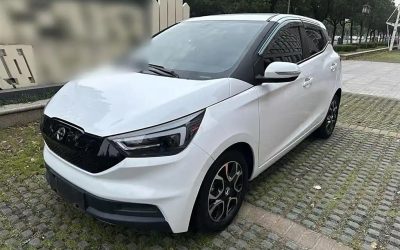
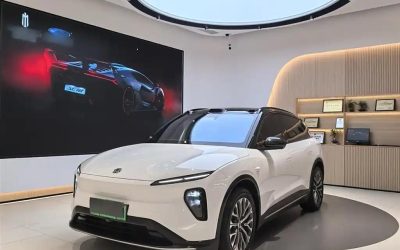
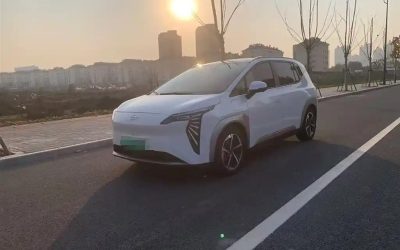
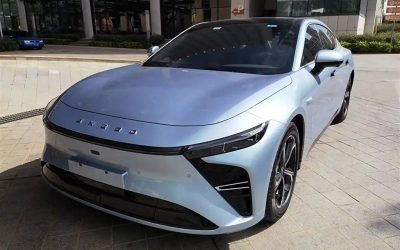
The evolution of china's new energy vehicles has moved beyond simple battery chemistry. Today, the real innovation lies in how the power source is woven into the very fabric of the vehicle. Technologies like Cell-to-Body (CTB) and Cell-to-Chassis (CTC) are no longer futuristic concepts; they are the new standard for efficiency, safety, and manufacturing agility.
Beyond the Battery Box: The Engineering Shift
Traditionally, EV batteries were built like Russian nesting dolls: cells inside modules, modules inside a pack, and the pack bolted to the chassis. This "box-in-a-box" approach creates redundant structures and wasted space.
CTB and CTC break this mold by turning the battery into a load-bearing member of the vehicle’s skeleton.
· CTB (Cell-to-Body): The battery’s top cover doubles as the cabin floor.
· CTC (Cell-to-Chassis): The cells are integrated directly into the chassis, effectively merging the power source with the car's structural frame.
For electric sedan cars, which require a low center of gravity and a sleek aerodynamic profile, this integration provides a critical advantage: it lowers the overall vehicle height while actually increasing interior legroom.
Factory Optimization: Leaner Lines and Faster Cycles
From a manufacturing standpoint, moving to an integrated architecture is a masterclass in "Simplification by Design."
1. Vertical Integration of the Assembly Line: By treating the battery and chassis as a single "skateboard" unit, factories can significantly reduce the number of assembly stations. This reduces the footprint of the production line and accelerates the "Tact Time" (production speed per unit).
2. Elimination of Redundancy: Integrated designs can remove up to 20% of non-functional structural components, such as heavy brackets, internal module partitions, and complex wiring harnesses. Fewer parts mean fewer points of failure and a more streamlined supply chain.
3. Enhanced Torsional Rigidity: Because the battery pack is now a stressed member of the frame, the vehicle’s structural stiffness can increase by over 30%. In the factory, this translates to a more stable assembly process and a final product with superior handling and crash safety.
Thermal Management and Range Extension
The most tangible benefit for the driver is the "Two-Pronged" approach to range extension: Weight Reduction and Energy Density.
Negative Mass Engineering: By removing heavy protective casings and internal module walls, the vehicle’s curb weight drops significantly. In the world of EVs, every kilogram saved is a fraction of a kilometer earned in range.
Volume Utilization: Traditional packs often have a volume utilization rate of about 40-50%. CTB/CTC can push this above 60-70%. This allows for more active cell material in the same physical space, effectively boosting the energy density of the entire system without needing a breakthrough in chemical materials.
Uniform Cooling: Integrated designs often allow for more direct contact between the cooling plates and the cells. This superior thermal management ensures the battery operates in its "sweet spot" longer, preventing range degradation during high-speed driving or extreme weather.
The Future of Integrated Mobility
As we look toward the 2026 market, the transition to CTB and CTC represents the maturity of the industry. It’s a shift from "adapting" internal combustion engine platforms to "pure-play" EV architectures. By fusing the energy source with the chassis, manufacturers are creating vehicles that are lighter, safer, and more spacious—setting a new benchmark for what a modern electric sedan can achieve.
Your Trusted China Car Exporter | Premium New & Used Cars for Global Dealers
 Guide to Imported Cars in China